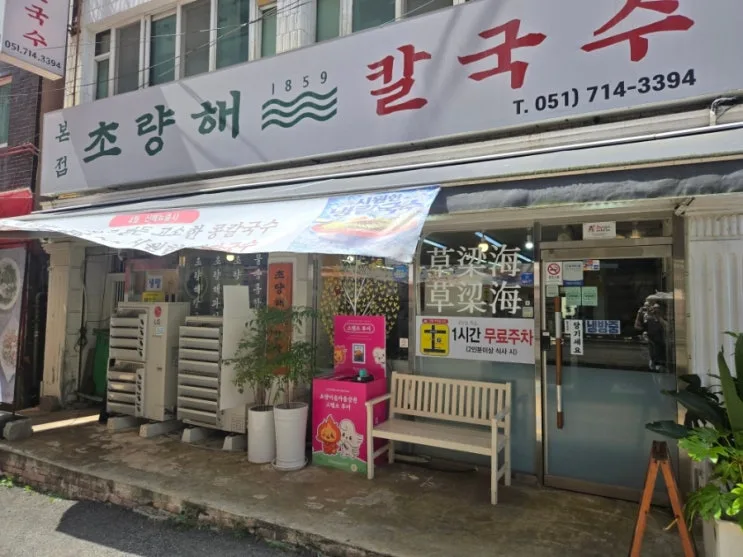
Choryanghae Kalguksu sits between Busan Station and Choryang Station in Busan, South Korea, and it’s best known for a seafood kalguksu that pairs whole cuttlefish with fresh shellfish. It’s an easy walk from either station, which makes it a convenient stop at the start or end of a trip. Thanks to the house-made noodles and a broth that’s clean, spicy, and deeply comforting, Choryanghae Kalguksu keeps drawing both local office workers and travelers.
What to Order at Choryanghae Kalguksu
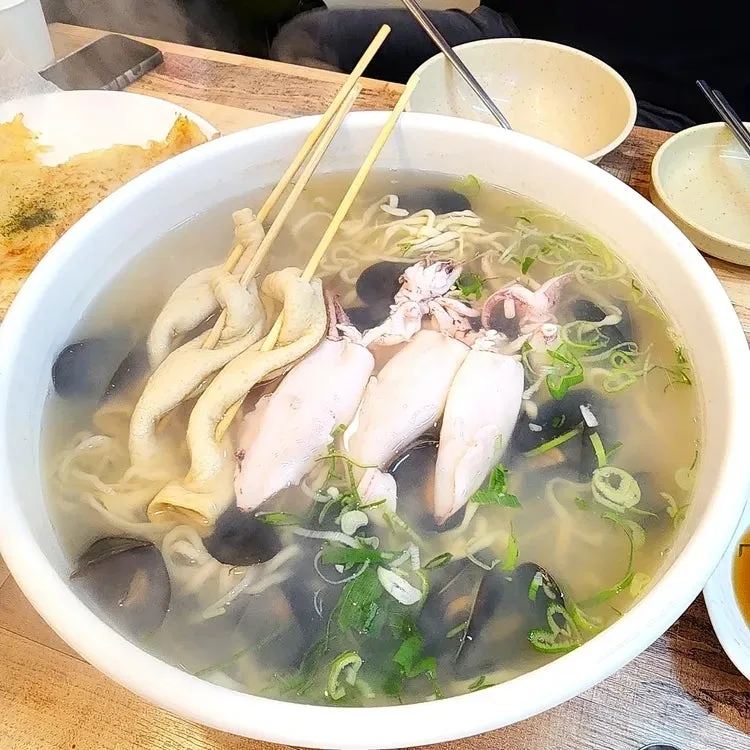
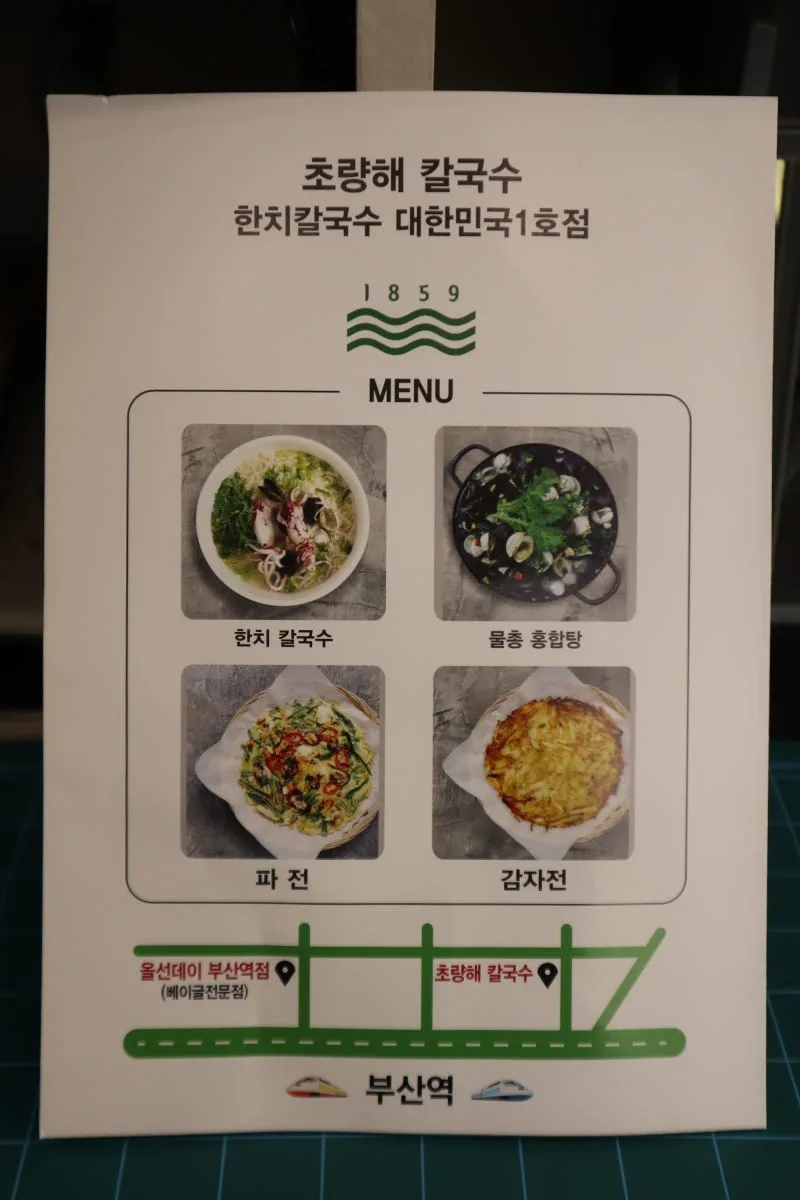
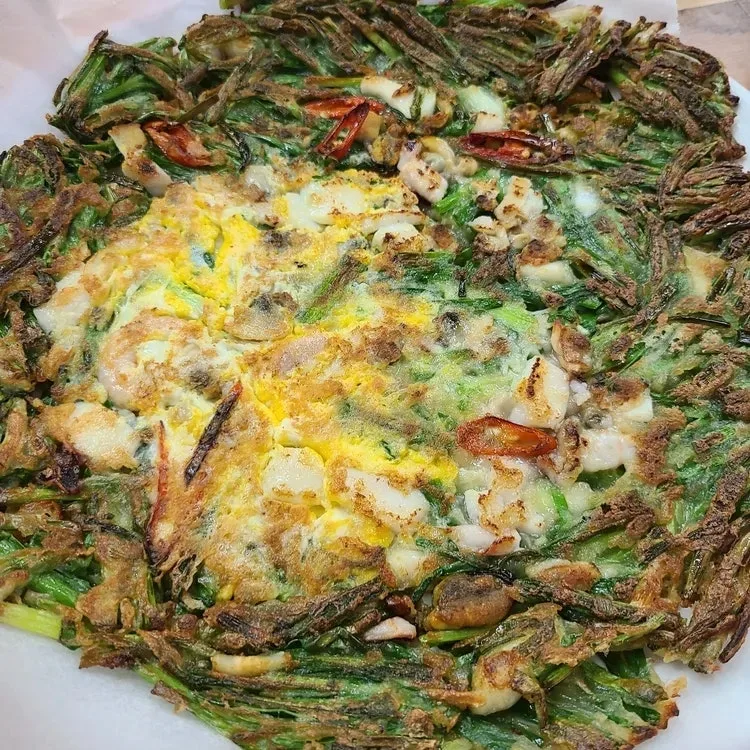
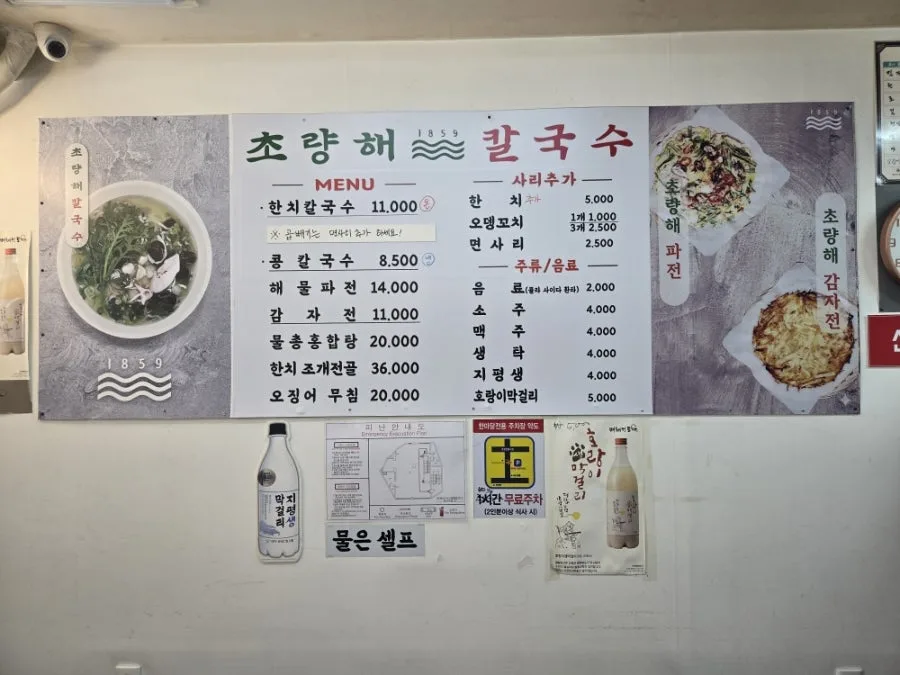
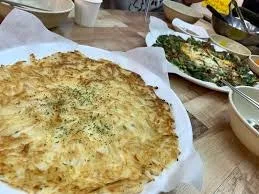
The signature dish here is hanchi kalguksu, a knife-cut noodle soup topped with a whole cuttlefish instead of the usual clam-only seafood mix. Each bowl also comes with mussels, Manila clams, hard clams, and skewered fish cake, so every bite has a different texture. The broth isn’t overly aggressive; it’s built on anchovy and vegetables, with a clean finish and a natural umami depth from the seafood. If one bowl doesn’t feel like enough, you can add extra cuttlefish, fish cake skewers, or more kalguksu noodles. For sides, the seafood pajeon, a crisp Korean scallion pancake, is a great pick, and the thinly shredded potato jeon has a lighter crunch that’s also easy to share.
Location, Subway Access, and Parking Near Busan Station
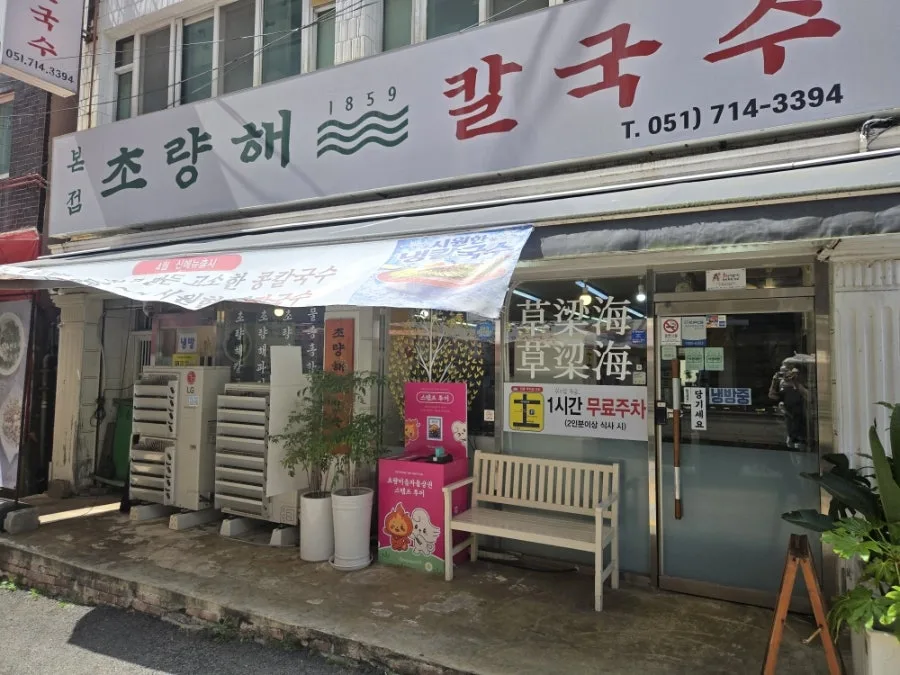
The restaurant is tucked into a side alley near the entrance to Choryang Traditional Market in Choryang-dong, Dong-gu, Busan, South Korea. It’s about a 3-minute walk from Exit 1 of Choryang Station and around 7 minutes on foot from Exit 7 of Busan Station, so it’s especially convenient if you’re relying on public transportation. If you’re driving, you can use Hanmadang Parking Lot directly across from the restaurant, and parties of two or more get 40 minutes of free parking with a meal. As of June 2026, the public parking lot for Choryang Traditional Market is being rebuilt as a new tower-style structure, with access expected to begin in late 2026 or early 2027.
Wait Times and What the Dining Room Is Like
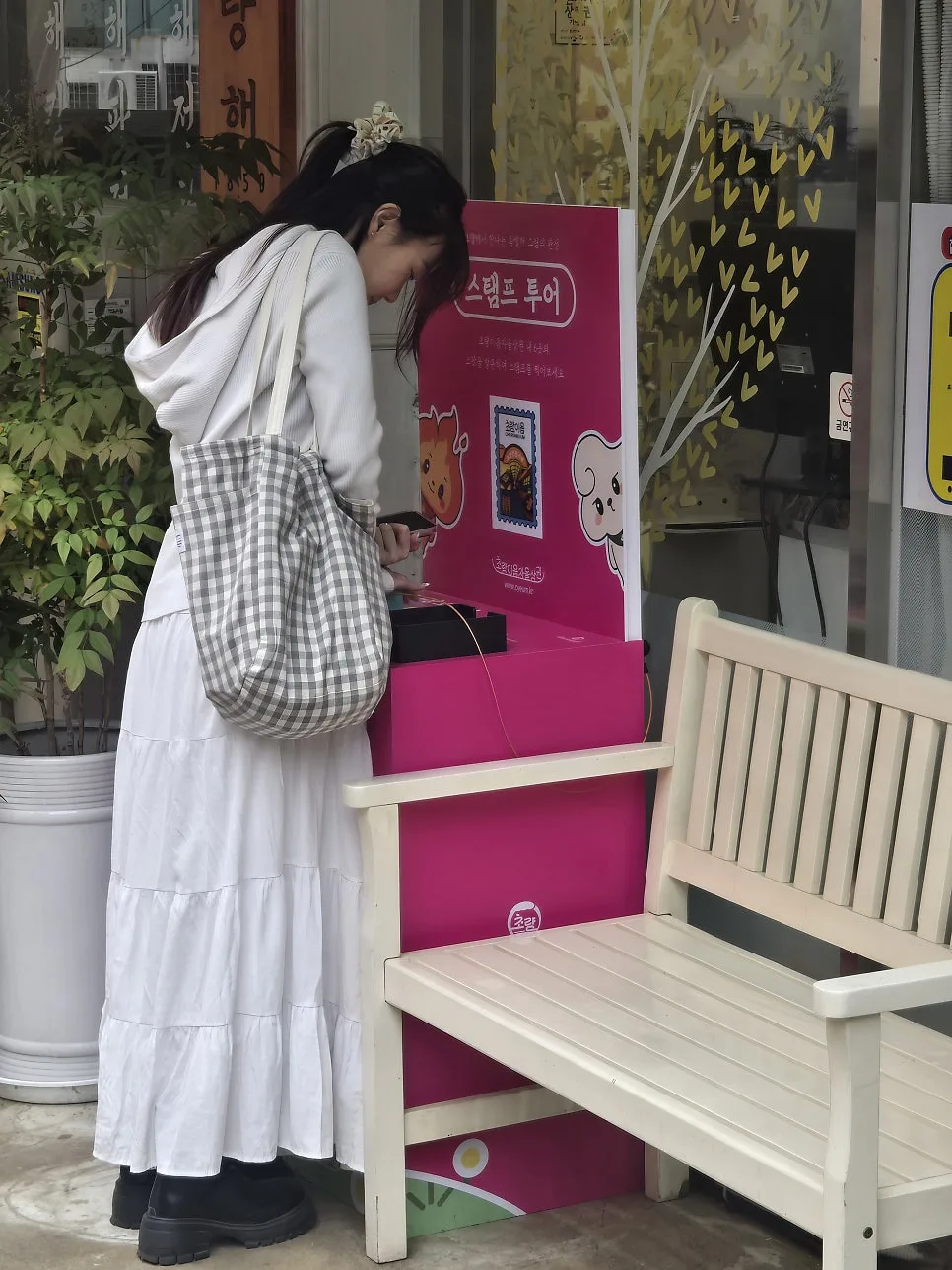
Choryanghae Kalguksu is open daily from 10 a.m. to 9 p.m., with different break times on weekdays and weekends. Around lunch, the line can get long as nearby office workers and travelers with rolling suitcases show up at the same time. If you want a quieter meal, try coming around 2 p.m., just after the main rush. The restaurant mainly operates on the first floor, and table turnover is fairly quick since most people are ordering noodle dishes. That said, there aren’t many large tables for bigger groups, so if you come with a crowd, you may need to split up. Right by the entrance, there’s also a small travel-friendly stamp event tied to the Choryang Ieum Autonomous Commercial District around Choryang Traditional Market: collect stamps from six spots and they come together as one postcard.
Tips for Solo Diners, Groups, and the Kimchi
This is an easy place for solo travelers to eat alone without feeling awkward. If you’re visiting with two or more people, I’d actually recommend mixing your order instead of getting one bowl per person right away—something like one kalguksu plus a potato jeon or seafood pajeon is a better way to try more of the menu. The napa cabbage kimchi set on each table is made in a fiery silbi-kimchi style, so it’s especially popular with people who love heat alongside a peppery broth. If someone in your group doesn’t handle spicy food well, it’s smart to go easy on the kimchi or balance it out with one of the pancake sides.
Another good trick is to let a little of the spicy kimchi melt into the broth for extra depth and heat.
Final Thoughts
If you need a solid meal before boarding a train or right after arriving in Busan, South Korea, this is a really convenient stop. What makes it memorable is that it’s not just another standard seafood kalguksu—the whole cuttlefish gives the dish a fun twist and builds a little anticipation while you wait. Between the carefully made noodles, the lightly spicy broth, and a bite of punchy kimchi, the meal feels simple but deeply satisfying. In the middle of a busy market alley, a hot bowl like this takes the edge off travel fatigue and gives you a real taste of the local neighborhood energy.