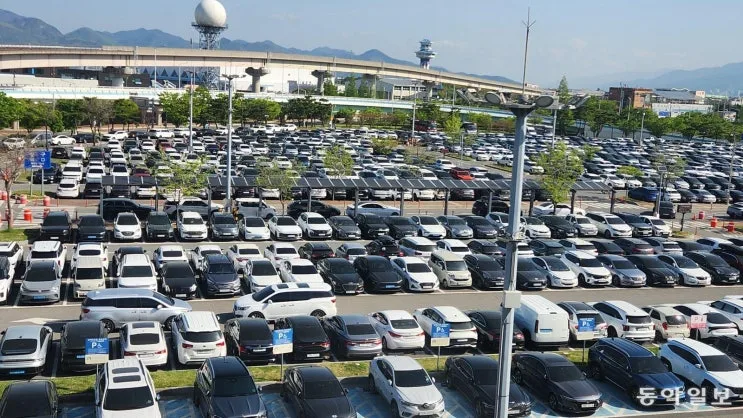
Nothing gets your heart racing quite like pulling up to the terminal on departure day and seeing a “Full” sign. A little planning for Gimhae Airport parking in Busan, South Korea, can spare you that panic. If the airport lots are full, check public parking near light rail stations or other nearby alternatives within walking distance of onward transportation. Leaving your car safely one stop away and hopping on the train can save time—and your sanity. Even with a little extra walking, you might still have time for a relaxed coffee before boarding.
Gimhae Airport Parking: Official Rates, 50% Discounts, and Full-Lot Backup PlansHere’s everything to check before you leave, so finding a parking spot doesn’t turn into a missed flight.
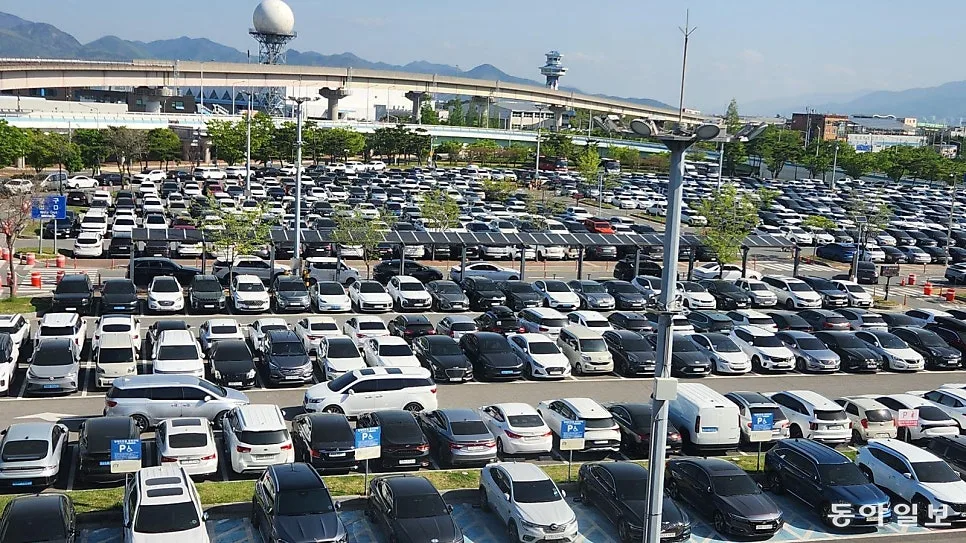
Source: The Dong-A Ilbo
Check Live Parking Availability on Your Phone
Before leaving home, check a mobile app or online search portal to see which lots still have spaces. If the availability indicator is red, you can head straight to your backup rather than waste time circling the airport. Many drivers now check these live updates as routinely as their navigation apps, and user feedback generally suggests they closely reflect conditions on the ground. A few taps before you start driving can make the whole departure feel easier.
Check Live Parking Availability at Gimhae Airport
https://parkingo.kr/airports/pus
Official Airport Parking Rates: Passenger Lots vs. Cargo Lot
The airport’s official parking facilities are divided into the P1 and P2 passenger parking lotsand, a little farther from the terminals, the P3 cargo parking lot.Weekday and weekend rates differ, so check which applies to your trip.
|
Parking Lot |
Weekdays (Monday–Thursday) |
Weekends (Friday–Sunday) and Public Holidays |
|
P1 / P2 Passenger Parking |
$7 per day |
Per day: $11 |
|
P3 Cargo Parking |
$5 per day |
Per day: $7 |
Money-saving tip: For a three-night, four-day trip over a weekend, P3 can work out much cheaper. It’s about a 10-minute walk to the passenger terminal, and shuttle buses also run regularly. Unless you’re juggling lots of luggage, P3 is worth considering.
How to Get a 50% Airport Parking Discount
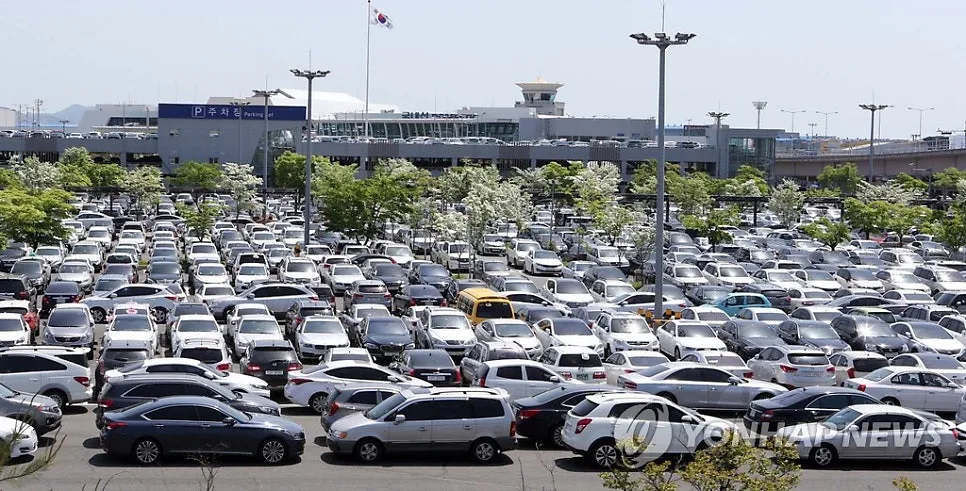
Courtesy of Yonhap News Agency
Leave your car for several days, and the bill waiting when you return can be an unwelcome surprise. But if you drive a qualifying mini car or eco-friendly vehicle, or belong to an eligible family with multiple children, you may qualify for an automatic parking discount. Linked government records and license plate recognition now make it possible to apply eligible discounts without checking paper documents at the payment machine. Confirming your eligibility ahead of time is one less thing to worry about when you get home.
Check whether you qualify before your trip. With the required eligibility and documentation, you could save half your parking bill—50%.
-
Mini cars (Engine displacement under 1,000 cc)
-
Low-emission vehicles (50% off for Classes 1 and 2; 20% off for Class 3)
-
Vehicles registered for people with disabilities and eligible persons of national merit
-
Families with multiple children (With a local-government-issued multi-child family benefits card and a youngest child age 15 or under)
Multi-child family discounts require registration, either before or after parking. Register in advance through the Korea Airports Corporation parking website to receive the discount automatically without a separate document check. Missed the discount at the airport? You can apply for a refund within 30 days after your trip, so keep your receipt.
How to Avoid Full Airport Parking Lots on Weekends
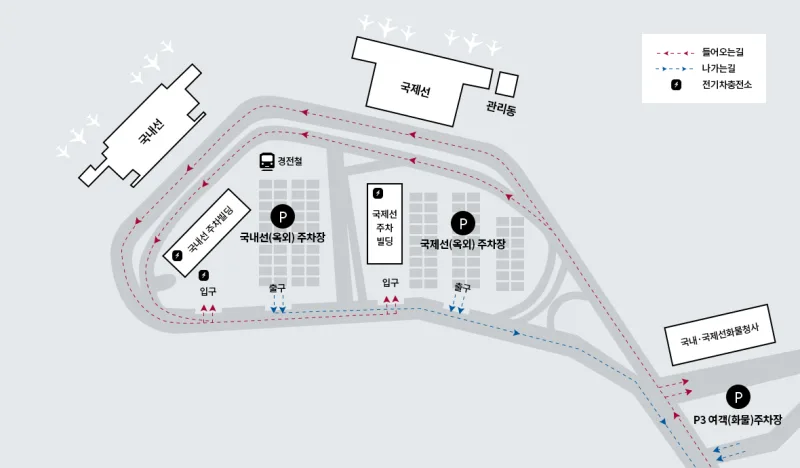
Courtesy of the Korea Airports Corporation website
If you’ll be away for three days or more, it’s worth asking whether driving actually makes financial sense. A car is convenient with a group and heavy bags, but an airport limousine bus or taxi may cost less for a solo business trip or a light-packing getaway. With fuel prices rising, more travelers are comparing the full transportation cost before deciding to leave the car at home. Set your priorities—cost, luggage, group size—and the choice gets easier.
On weekends and holiday breaks, the airport lots can reach 100% capacity. Circling for a space while your departure time creeps closer is stressful. The most reliable way to avoid that scramble is to reserve ahead.
-
How to book: Reserve through the Korea Airports Corporation website or app using its Gimhae Airport parking reservation service.
-
Location: Part of the P3 cargo parking lot is designated for reservations.
-
What to expect: Reservations require a separate deposit, which varies with the booking duration, but having a guaranteed space brings real peace of mind. Book at least two hours in advance.
No Reservations Left? Try a Nearby Private Parking Lot
If even the official reservable spaces are sold out, a private off-airport parking lot is a practical backup.
-
Lower rates: Typical daily prices run around $6–$7 on weekdays and $7–$9 on weekends, generally less than the official passenger parking lotscharge.
-
Free airport transfers: Many lots sit just across from the airport or a one- to two-minute drive away. After you park, their complimentary shuttle takes you to the third-floor departures area, then picks you up again when you return.
-
What to watch for: For greater control over your car’s security and movement, choose a lot offering “100% self-parking—you keep your keys.”
Gimhae Airport Parking: Your Final Checklist
Traveling on a weekend or during peak season? Check official parking reservations two to three weeks ahead.
If those spaces are gone, book a well-reviewed private lot nearby and take the uncertainty out of departure day.
If you qualify for a mini-car, low-emission vehicle, or multi-child family discount, make sure you claim it at the official lots.
One Last Money-Saving Tip: Free Parking
About 3 km from Gimhae International Airport, Daejeo Ecological Park in Gangseo-gu, Busan, has parking areas—including Lot 5 and Lot 3—that do not charge parking fees. Some airport travelers leave their cars here to avoid the crowded airport lots.
-
Getting to the airport: After parking, call a taxi for the roughly five- to ten-minute ride to the airport, costing around $4. Public transportation is another option, using the Busan–Gimhae Light Rail to reach the airport. Note that nearby Gangseo-gu Office Station is on Busan Metro Line 3, not the light rail itself, so that route requires a transfer.
-
The upside: With no parking charge, even a stay of several days can offer substantial savings—provided current park rules allow it.
Free Parking: Important Caveats Before You Go
Free parking is appealing, but these aren’t dedicated airport parking lots. There are several important things to consider before leaving your car.
-
Possible restrictions on long-term parking: As airport travelers increasingly use park spaces for long stays, reports of overcrowding and drivers monopolizing spaces have prompted tighter local oversight and restrictions. You could face penalties if your vehicle is treated as abandoned or left unattended for too long. These are also open-air lots where CCTV coverage may be less extensive than at official airport facilities, and responsibility for damage or theft may be unclear.
-
Weather and flood risk: Because the ecological park sits beside the river, heavy rain and the summer monsoon can bring flooding risks. Check the forecast for your entire trip before deciding to park here.
An Alternative: Private Parking Lots with Free Airport Shuttles
Parking itself isn’t free, but nearby operators such as Garam Parking, OK Jijeong Parking, and Gangseo Parking offer complimentary airport shuttle pickup and drop-off. For around $6–$7 a day—generally less than the official passenger lots—you get an easy ride right to the terminal. It’s a frequently recommended, practical middle ground between saving money and avoiding extra hassle.
I always look forward to a trip, but figuring out where to leave the car used to feel like homework. Looking beyond the terminal lots and checking live availability has made departures much less stressful. Less time circling means more time to enjoy the journey—and that’s a habit I’m happy to keep.