Taiwan is one of the easiest trips we make as a family from Busan — a flight of roughly two and a half hours, no visa paperwork, and a food scene that a three-year-old and two tired adults can all enjoy. And yet this short hop has one trap that catches even experienced travelers: planning the trip without knowing Taiwan’s own public holiday calendar. Taiwan’s biggest holiday is Lunar New Year, not the solar New Year, and since a 2025 legal amendment the country’s holiday structure has changed in ways most foreign visitors have not caught up with. Book the same Taipei hotel on the wrong week and the rate doubles, Din Tai Fung is shuttered, and every seat on the high-speed train to Kaohsiung is gone.
2027 is a year when this matters more than usual — and, happily, a year that is unusually easy to plan around. Under the amended Memorial Days and Festivals Implementation Act, Taiwan now follows a “substitute day off, no make-up workday” (bǔjià bù bǔbān, 補假不補班) principle: when a holiday falls on a weekend, you get a substitute day off, but no one has to come in on a Saturday to make up for it. As a result, 2027 (Republic of China year 116) has 121 days off, nine long weekends of three days or more, and zero make-up workdays — all confirmed in the official government office calendar published by the Directorate-General of Personnel Administration on 21 May 2026.
This guide lays out the two peak seasons you must avoid, the three-day weekends that quietly wreck budgets, and the practical tactics — early-bird rail tickets, reverse-itinerary sightseeing, fixed-price transfers, and cash planning — that bring hotel and transport costs back down to normal. Bookmark it and open it again before you confirm your dates.
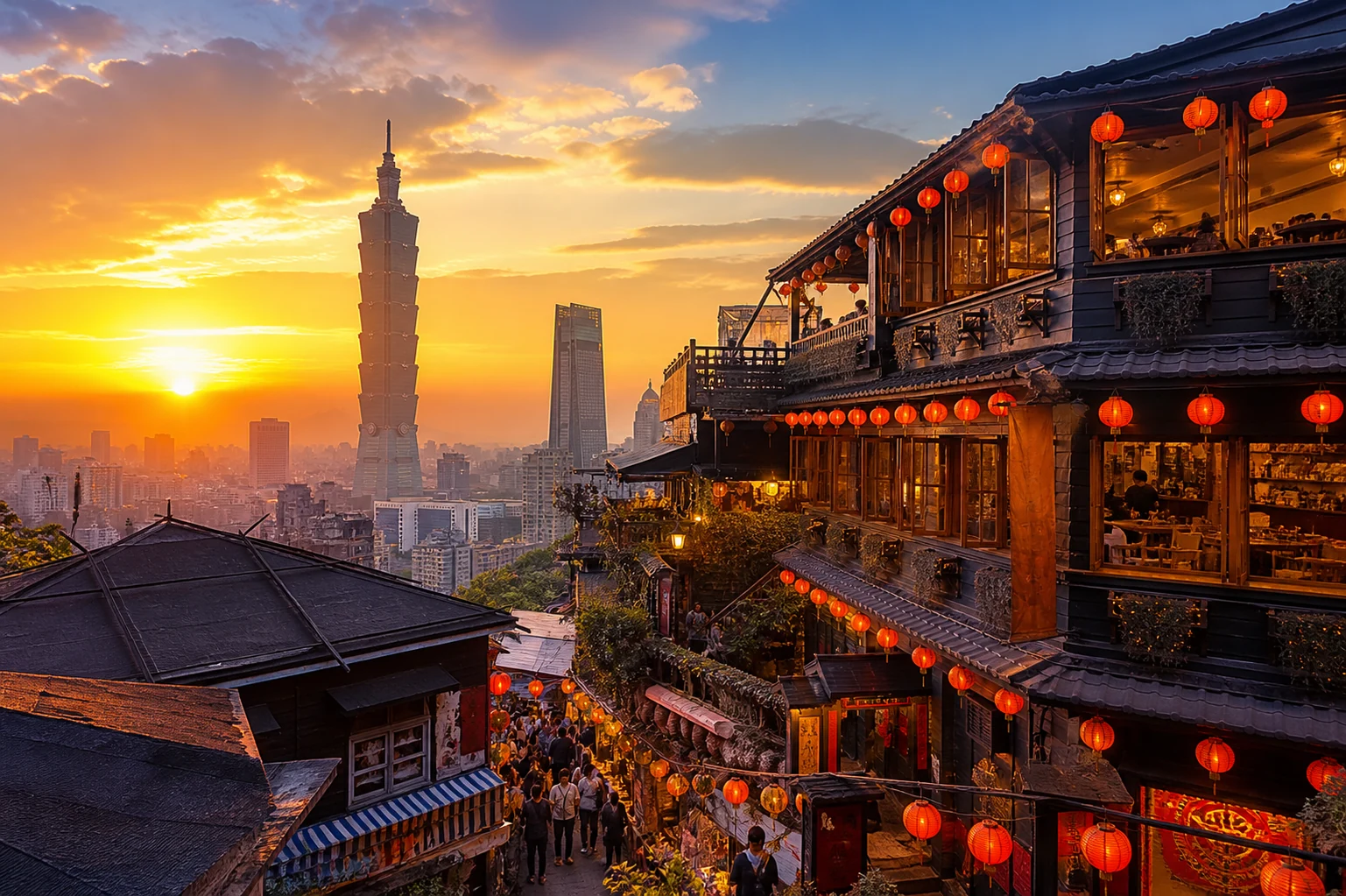
1. The Two Peak Seasons: A Close Look at Lunar New Year and Qingming
Hoteliers and tour operators in Taiwan name two periods as the year’s worst: Lunar New Year (Spring Festival) and the Children’s Day–Qingming long weekend. These are not merely “busy” dates. Hotel rates, train availability, and whether a restaurant is open at all change qualitatively during these weeks. Here is what each one actually does to a trip.
① Lunar New Year 2027 — 4–10 February (Thursday to Wednesday), seven days
In 2027 the first day of the first lunar month falls on Saturday, 6 February. The official holiday runs from Thursday 4 February (Little New Year’s Eve, 小年夜) through Wednesday 10 February, seven days. The structure is worth understanding: Friday 5 February is New Year’s Eve (除夕), Saturday 6 February is New Year’s Day, and Sunday 7 February is day two. Because days one and two fell on the weekend, Tuesday 9 and Wednesday 10 February became substitute days off. Add two days of annual leave on Thursday 11 and Friday 12 February, and a Taiwanese office worker gets eleven consecutive days from 4 to 14 February — which is exactly why airfares and hotel inventory start disappearing from 3 February.
One distinction matters enormously for travelers. The seven-day block is the government office calendar, applying to civil servants and public institutions. Private employers follow the Labor Standards Act, which mandates five days — from the day before New Year’s Eve through the third day of the new year (4–8 February 2027). That means Thursday 11 February looks like reopening day on paper, but individual businesses reopen on their own schedules. Long-established restaurants routinely post notices saying they will open on the fifth day, or only after the Lantern Festival.
Four things actually happen to visitors:
- Restaurants close en masse. On New Year’s Eve (5 February) and the first two days (6–7 February), even large chains cut hours or shut. Well-known names such as Din Tai Fung close some branches on New Year’s Eve, and family-run beef noodle shops, Kiki Restaurant, and individual night-market stalls often reopen only on the fourth or fifth day. Whatever stays open has a one-to-two-hour queue.
- High-speed rail sells out. Southbound reunions peak 4–6 February (Taipei to Kaohsiung, Tainan, Pingtung); the return wave hits 9–10 February. Standard and non-reserved cars both sell out, and buying at the station on the day is not a real option.
- Taxis charge a legal surcharge. Local governments publish a Spring Festival surcharge, built into the meter: NT$30 per ride in Taipei, New Taipei and Keelung; NT$50 per ride in Taoyuan (NT$100 for airport stand taxis), Taichung, Tainan, Kaohsiung, Pingtung and several other cities, typically for 10–12 days. It is regulation, not a scam — and conversely, a driver quoting a flat price off the meter during this period can be declined.
- Hotel rates double or triple. A Taipei business hotel that runs NT$3,000–4,000 a night routinely quotes NT$8,000–12,000. Kaohsiung and Tainan are often worse because domestic tourism piles on top of the reunion traffic.
② Children’s Day and Qingming — 3–6 April (Saturday to Tuesday), four days
The second peak runs Saturday 3 April through Tuesday 6 April. Children’s Day falls on Sunday 4 April and Qingming — the tomb-sweeping festival — on Monday 5 April; because Children’s Day landed on a Sunday, Tuesday 6 April became the substitute day off. With annual leave on Wednesday 7 to Friday 9 April, that becomes nine days from 3 to 11 April.
This holiday behaves differently from Lunar New Year. Spring Festival sends Taiwanese travelers abroad; Qingming sends them around their own island. Families drive to family graves and then to domestic destinations, pushing rates to their annual peak in Hualien, Chiayi (Alishan), Kenting, Tainan and Pingtung. Highway traffic backs up on the first morning and the final afternoon, and day-trip products such as the Alishan Forest Railway and Taroko Gorge sell out well in advance.
Because early April also lines up with a weekend in Korea, airfares rise at the same time. For a family trip, it is better to skip the first week of April and shift to mid-April weekdays, which deliver a far more comfortable trip for the same budget.
2. The 2027 Three-Day Weekend Calendar (and When the Weather Actually Works)
“Just avoid Lunar New Year and Qingming” sounds sufficient — but 2027 has nine long weekends. A three-day weekend is enough to upset a short itinerary, and more importantly it lifts hotel rates into weekend pricing. Here is the full list in date order.
- New Year: 1–3 January (Fri–Sun), 3 days. The Taipei 101 countdown. Downtown hotels sell out by the night from 31 December and roads around the venue are closed.
- Peace Memorial Day: 27 February–1 March (Sat–Mon), 3 days. 28 February falls on a Sunday, so Monday 1 March is the substitute day off. It lands right after Lunar New Year, when everyone who stayed home decides to travel.
- Children’s Day and Qingming: 3–6 April (Sat–Tue), 4 days. The second peak described above.
- Labor Day: 30 April–2 May (Fri–Sun), 3 days. The 2025 amendment extended Labor Day to everyone, creating this new long weekend; because 1 May is a Saturday, Friday 30 April is the substitute day. Early May is also when Taiwan’s plum rain (梅雨) begins, so build in weather flexibility.
- National Day (Double Ten): 9–11 October (Sat–Mon), 3 days. 10 October is a Sunday, so Monday 11 October is the substitute. The trouble is that this overlaps exactly with Taiwan’s best travel season.
- Retrocession Day: 23–25 October (Sat–Mon), 3 days. Officially “Taiwan Retrocession Day and the Memorial Day of the Great Victory at Guningtou,” a newly created holiday under the 2025 amendment. October now has two long weekends, not one.
- Constitution Day (Christmas): 24–26 December (Fri–Sun), 3 days. 25 December is a Saturday, so Friday 24 December is the substitute. Christmas is not a major cultural event in Taiwan, but year-end parties and trips still push Taipei rates up.
- 2028 New Year substitute: 31 December 2027–2 January 2028 (Fri–Sun), 3 days. Because 1 January 2028 is a Saturday, Friday 31 December 2027 becomes a day off. This is the ninth long weekend and the start of a five-day year-end break — mark it if you are planning a late-December trip.
Some holidays do not become long weekends, and that matters too. Dragon Boat Festival (Wednesday 9 June), Mid-Autumn Festival (Wednesday 15 September) and Teachers’ Day (Tuesday 28 September) are single days in the middle of the week. Because the new rules no longer create make-up Fridays, Taiwanese travelers take their own leave and cluster around 5–9 June, 15–19 September and 25–28 September. Expect elevated hotel demand in those windows as well.
So when is the best time to visit Taiwan?
By climate, the answer is mid-October to November: the typhoon season is over, humidity drops, and daytime temperatures sit at a comfortable 24–28°C — ideal for walking with a small child. But note that 9–11 October and 23–25 October are long weekends, so the real sweet spot is 12–22 October and 26–31 October, on weekdays. March and April are pleasant too, provided you dodge 3–6 April. May is the start of the plum rain, and June through September brings typhoons, 35°C heat and high humidity that are hard work with a toddler. December to February is Taipei’s damp, chilly rainy season — but also the cheapest low season of the year, as long as you avoid Lunar New Year.
3. Practical Tactics: Beating the Crowds on Hotels and Transport
Knowing the calendar is half the job. The other half is deciding where to move within the same holiday window. These four tactics are the ones that actually work.
Tactic 1 — Book high-speed rail the day sales open; the 65%-fare cutoff is five days out
Taiwan High Speed Rail (THSR) opens reservations 29 days before travel, including the travel day (and on Fridays and Saturdays you can book up to the Sunday four weeks out). The important detail is the early-bird discount: a Taipei–Kaohsiung standard reserved seat at roughly NT$1,490 can drop to 65% of the fare, about NT$965. The rules:
- Discounts are released in tiers — 65%, then 80%, then 90% — and once a tier sells out, the next one applies. Some extreme-peak trains offer no early-bird discount at all.
- Sales close five days before travel. “I’ll grab it two or three days ahead” does not work.
- Tickets are name-based: the last five characters of your passport number are printed on the ticket and checked on board. Enter the details correctly, or you will be buying a new ticket.
- Early-bird tickets are sold only through the official online system, the T-EX app and partner convenience stores — not at station counters or ticket machines.
During Lunar New Year and Qingming, THSR publishes a separate holiday traffic plan that can open booking earlier than the standard 29 days. Do not rely on the general rule for those dates; check THSR announcements from two months out. Foreign visitors should also compare the foreigner-only THSR passes (such as the three-day unlimited pass) and Klook/KKday segment tickets — but remember a pass still requires a seat reservation, and “the pass is valid, the train is full” is a real scenario over a long weekend.
Tactic 2 — At Lunar New Year, do the reverse: go to Taipei
Taiwanese travel at Spring Festival flows overwhelmingly from Taipei south to Kaohsiung, Tainan and Pingtung. The flip side is that Taipei itself becomes the quietest city of the year. Cafés that normally require a queue, restaurants that are impossible to book, and packed metro cars all ease off.
Build those days around department stores, malls, museums and parks. Independent shops and old-school eateries may be shut, but department-store restaurant floors (Shin Kong Mitsukoshi, Taipei 101 Mall, SOGO), large chains, cinemas and big bookstores mostly stay open. Check the official site for museums such as the National Palace Museum, which close on one day of the holiday period. And go the other way for Jiufen and Shifen: over Lunar New Year, domestic tourists flood them and road closures plus shuttle queues get long. Either go at dawn on the first day or save the outskirts for after the holiday.
Tactic 3 — Take the Yehliu–Shifen–Jiufen taxi tour at a fixed, pre-booked price
The classic north-coast day trip — Yehliu Geopark, Shifen and Jiufen, often shortened to “ye-seu-jin-ji” by Korean travelers — has the highest satisfaction of any family itinerary in northern Taiwan. The risk is negotiating on the day. During holidays drivers quote per-vehicle day rates that double, and detours to souvenir stops are not unheard of.
The fix is simple: book a fixed-price product in advance on Klook or KKday. Vehicle type (four- or eight-seater), route, inclusions (tolls, parking, driver’s meal) and duration are all specified, and the price you pay is final. If you are traveling with a child, message the operator about child-seat availability and stroller space when booking. Holiday departures often sell out, so book two to three weeks ahead.
Tactic 4 — Top up your EasyCard and carry cash before the banks close
The EasyCard (悠遊卡) is essential: it covers the metro, buses, convenience stores and some night markets, and can be bought at airport MRT stations and convenience stores. The catch is that top-ups are usually cash only — the convenience-store counter is the most reliable place to add value.
During Lunar New Year, bank branches and city currency-exchange counters close for the entire holiday, and airport exchange desks run reduced hours. Withdraw living expenses (roughly NT$2,000–3,000 per person per day) from an airport ATM on arrival and load NT$500–1,000 onto the EasyCard. Card acceptance is growing fast in Taiwan, but night-market stalls, traditional markets, taxis, temples and small-town restaurants still run on cash. Taiwan has no tipping culture, so keep small bills and coins handy.
4. 2027 Taiwan Long Weekends at a Glance
| Holiday | Dates (2027) | Days off | Crowd level | What to watch / recommended strategy |
|---|---|---|---|---|
| Lunar New Year | 4–10 Feb (Thu–Wed); New Year’s Eve 5 Feb | 7 (11 with leave on 11–12 Feb) | ★★★★★ | Restaurants shut, THSR sold out both directions, NT$30–50 taxi surcharge, hotels 2–3×. Reverse to Taipei, or arrive after 10 Feb |
| Children’s Day & Qingming | 3–6 Apr (Sat–Tue) | 4 (9 with leave on 7–9 Apr) | ★★★★☆ | Peak rates in Hualien, Alishan, Kenting, Tainan. Shift to mid-April weekdays |
| National Day (Double Ten) | 9–11 Oct (Sat–Mon) | 3 | ★★★★☆ | Collides with the best weather. Use 12–22 or 26–31 Oct weekdays instead |
| Retrocession Day (new) | 23–25 Oct (Sat–Mon) | 3 | ★★★★☆ | Late-October break; domestic demand concentrates in Tainan and Kaohsiung |
| Peace Memorial Day | 27 Feb–1 Mar (Sat–Mon) | 3 | ★★★☆☆ | Post-Lunar-New-Year travel surge; weekdays from 2 Mar are calmer |
| Labor Day | 30 Apr–2 May (Fri–Sun) | 3 | ★★★☆☆ | Newly universal since 2025; plum rain begins, watch the forecast |
| New Year | 1–3 Jan (Fri–Sun) | 3 | ★★★★☆ | 101 countdown; downtown hotels full on 31 Dec, road closures |
| Constitution Day (Christmas) | 24–26 Dec (Fri–Sun) | 3 | ★★★☆☆ | Year-end parties; Taipei hotel rates rise |
| 2028 New Year substitute | 31 Dec–2 Jan 2028 (Fri–Sun) | 3 | ★★★☆☆ | The ninth long weekend; part of a five-day year-end break |
| Dragon Boat / Mid-Autumn / Teachers’ Day | 9 Jun (Wed), 15 Sep (Wed), 28 Sep (Tue) | 1 each | ★★☆☆☆ | Not long weekends, but leave-clustering pushes hotel demand up around them |
Crowd levels and rate increases are approximate, based on normal-year peak patterns; actual prices vary by city, room type and booking timing, so recheck your own dates before booking. All dates above follow the government office calendar — private companies and individual businesses may keep different hours.
5. Frequently Asked Questions
Q1. Does everything in Taipei really close over Lunar New Year? How do I check?
Not everything. New Year’s Eve (5 February) and New Year’s Day (6 February) are the quietest, places begin reopening from the second day, and by the fourth or fifth day (8–9 February) most are back to normal. Three practical ways to check: first, Google Maps’ “temporarily closed” flag often updates only just before the holiday, so the shop’s own Instagram or Facebook notice is faster; second, department-store restaurant floors and large malls stay open and are the safe choice; third, if you are traveling with a child, book a hotel that includes breakfast or a buffet, and treat convenience stores and chain restaurants as your fallback so the plan does not collapse.
Q2. Jiufen’s lantern street is said to be unbearable during holidays. How should we visit?
Jiufen runs vehicle controls over Lunar New Year and Qingming, and the hilltop car park plus shuttle queue can exceed an hour. The answer is to invert the clock. Arrive before 9 a.m., before the tour buses and before the shops open, when the alleys are at their emptiest. Better still, stay one night in Jiufen: after the day-trippers leave around 6 p.m., the lantern-lit streets are a different place, and early morning gives you empty alleys for photos. If you use taxis instead of the shuttle, fixed-price taxis from Ruifang Station cut the wait considerably. Strollers are impractical on the stone stairs — bring a carrier instead.
Q3. If reserved seats on the high-speed train are sold out, can we just take a non-reserved car?
You can, with conditions. Non-reserved cars only work if there is standing room, and over Lunar New Year and Qingming the non-reserved queue can stretch along the platform, with families watching two or three trains leave. Three alternatives: shift your time slot — trains just before the 7–9 a.m. commuter peak or after 8 p.m. are calmer; split the journey — if Taipei–Kaohsiung is full, book Taipei–Taichung plus Taichung–Kaohsiung, or reroute via Chiayi and bus up to Alishan; or take an intercity bus, which takes about five hours Taipei–Kaohsiung but adds extra services over holidays and is far easier to book. With a child, changing your time slot always beats gambling on a non-reserved car.
Q4. What should we pack for Taiwan’s weather?
Taipei and Kaohsiung can differ by more than 5°C on the same day. In October and November (the best window), short sleeves plus a light cardigan or windbreaker is enough, with one long-sleeve layer for cool evenings. In December to February, Taipei is wet and damp, so 10°C feels much colder than it sounds: bring a waterproof outer layer and an umbrella (Kaohsiung is often still short-sleeve weather at the same time). March and April bring large day-to-night swings and pollen, so pack a mask if you have allergies. June to September means 35°C, high humidity and possible typhoon cancellations — always build at least one spare day into a summer itinerary. With a toddler, two or three thin long-sleeve sets and a spare pair of shoes are the preparations you will never regret.
Final Thoughts: One Calendar Changes the Whole Trip
The biggest saving in Taiwan is not a fare sale — it is moving your dates off the holiday calendar. In 2027, with no make-up workdays and nine long weekends packed into the year, simply knowing the calendar can bring the same hotel and the same high-speed train down to roughly half the cost. Avoid Lunar New Year (4–10 February) and the Qingming weekend (3–6 April), and aim for the weekdays between October’s two long weekends (9–11 and 23–25 October): the difference in the trip is dramatic.
Open the table above before you build your itinerary, and do one last check for where Taiwanese and Korean holidays overlap before you press book. Next in this series: Vietnam in 2027, and why you must plan around Tết — the same method applied to Southeast Asia.